Details including experts involved of
each activity
Task Force Information
Objectives
A prebiotic is a food ingredient that selectively stimulates growth and/or the activity of microbial species inhabiting the host, which may bring about health benefits. A better understanding of mechanisms of prebiotics is still needed. The task force aims at providing mechanistic insights linking prebiotics to individual health benefits.
Task Force Members
Clémentine Thabuis-Chair
Roquette
FR
Elaine Vaughan-Vice-Chair
Cosun
NL
Kristin Verbeke, Co-Chair
Translational Research Center for Gastrointestinal Disorders (TARGID)
BE
Paul de Vos
Centre for Healthy Eating & Food Innovation (HEFI), Maastricht University)
For more detailed information, please contact Léonie Lang at llang@ilsieurope.be
Activity Overview
Ongoing
- Markers of the Gut Microbiota
The group aims to identify key markers for assessing microbiota improvement, focusing on measurable indicators of microbiota composition. The activity is shared with the Probiotics Task Force.
Start date: Q4 2024 - End date: Q2 2026
- Role of Prebiotics in Better Managing Women’s Health
The Expert Group will aim to understand the extent and mechanisms by which prebiotics impact the women’s health in different stages of life.
Start date: Q4 2025 - End date: Q1 2027
In the Pipeline
- Prebiotics and Weight Management
The research group will explore how prebiotics support weight control, both independently and alongside GLP-1 receptor agonists. A workshop on GLP-1 analogues and health outcomes is planned for Q1 2026. The Expert Group will investigate key mechanisms, such as SCFA production, gut hormone stimulation, and microbiome modulation—with a focus on enhancing satiety, metabolic regulation, and treatment adherence. A key objective is to evaluate whether prebiotics can help reduce GLP-1–related side effects, such as gastrointestinal discomfort.
Expected kick-off: Q1 2026
Expert Groups
Markers of the Gut Microbiota
Background and Objectives
The aim of this activity is to establish standardized markers for assessing improvements in gut microbiota composition and activity resulting from dietary interventions. This involves identifying and evaluating relevant markers, such as microbial metabolites, for their predictive value regarding health outcomes and pinpointing overlooked indicators that may be crucial for assessing human health status. The activity aims to integrate various targets, including microbiota composition, enzymatic systems, microbial metabolites, mucosal integrity, and immune response, to enhance the accuracy and predictive power of these evaluations. This approach will help link changes in gut microbiota to health benefits from prebiotics and support the development of consistent and informative parameters for human studies.
Role of Prebiotics in Better Managing Women’s Health
Background and Objectives
The aim of this activity is to review the role of prebiotics in women’s health across the life course, taking into account interactions between the microbiome, immune system, metabolism, and hormonal changes. The review will cover key stages including puberty, reproductive years, pregnancy, menopause, and aging, and will consider both prevention and management of relevant health conditions. The objectives include: (1) summarizing current evidence on specific prebiotics and women’s health outcomes, (2) describing key mechanisms involving microbial composition, metabolites, barrier function, immune regulation, and estrogen metabolism, and (3) identifying research gaps and priorities for future hormone-informed and inclusive studies.
Output
This activity will result in a scientific review and life-course framework summarizing the evidence, mechanisms, and research priorities for the use of prebiotics to support women’s health across different life stages.
This perspective article is a product of the work of an expert group within the Prebiotic Task Force convened by the International Life Sciences Institute Europe (ILSI Europe), a non-profit organization that brings together experts from academia, industry and public service to catalyse nutrition science for public benefit.
Numerous studies have established that prebiotic ingredients in foods and dietary supplements may play a role in supporting human health. Over the three decades that have passed since prebiotics were first defined as a concept, research has revealed a complex universe of prebiotic-induced changes to the human microbiota. There are strong indications of a direct link between these prebiotic-induced changes and specific health benefits.
Prebiotics, particularly non-digestible carbohydrates (NDCs), are increasingly recognized for their role in modulating immune responses in the gut, lungs, and urinary tract. This review systematically evaluates evidence from human studies on the effects of NDCs and prebiotics on immune markers, infection risk and severity, inflammation, and vaccine responses. Prebiotics such as inulin, galactooligosaccharides (GOS), and fructooligosaccharides (FOS) positively influence gut microbiota by promoting beneficial species like Bifidobacteria. They also enhance the production of short-chain fatty acids (SCFAs) like butyrate, which interact with immune cells via G-protein-coupled receptors, inducing anti-inflammatory effects. In addition to microbiota-mediated mechanisms, NDCs and prebiotics may directly affect immune and epithelial cells by interacting with pattern recognition receptors (PRRs), enhancing gut barrier function, and modulating immunity. A systematic review of human studies showed that prebiotics, including GOS, FOS, and 2′-fucosyllactose (2FL), reduced infections and increased IgA in healthy infants, while yeast β-glucan reduced respiratory infection symptoms in healthy adults. Yeast β-glucan and GOS supplementation resulted in improvements in NK cell activity. Some effects on vaccine efficacy were noted in young adults, but the overall impact of NDCs and prebiotics on vaccination and systemic inflammation was inconsistent. Further research is needed to clarify the mechanisms involved and to optimize health applications.
[post_title] => Impact of non-digestible carbohydrates and prebiotics on immunity, infections, inflammation and vaccine responses: a systematic review of evidence in healthy humans and a discussion of mechanistic proposals
[post_excerpt] =>
[post_status] => publish
[comment_status] => closed
[ping_status] => closed
[post_password] =>
[post_name] => impact-of-non-digestible-carbohydrates-and-prebiotics-on-immunity-infections-inflammation-and-vaccine-responses-a-systematic-review-of-evidence-in-healthy-humans-and-a-discussion-of-mechanistic-pro
[to_ping] =>
[pinged] =>
[post_modified] => 2025-06-23 07:50:13
[post_modified_gmt] => 2025-06-23 07:50:13
[post_content_filtered] =>
[post_parent] => 0
[guid] => https://ilsi.eu/?post_type=publication&p=16186
[menu_order] => 0
[post_type] => publication
[post_mime_type] =>
[comment_count] => 0
[filter] => raw
)
[1] => WP_Post Object
(
[ID] => 15120
[post_author] => 351
[post_date] => 2024-11-18 14:13:17
[post_date_gmt] => 2024-11-18 14:13:17
[post_content] =>
Abstract
This perspective article is a product of the work of an expert group within the Prebiotic Task Force convened by the International Life Sciences Institute Europe (ILSI Europe), a non-profit organization that brings together experts from academia, industry and public service to catalyse nutrition science for public benefit. An expert group was conceived in October 2023 to discuss the evidence base on the use of prebiotics to promote cognitive functioning, with a focus on highlighting knowledge gaps and proposing a list of recommendations to guide this specific area of research forward. To address this, we evaluated existing systematic reviews and meta-analyses of human intervention studies that examine the effects of prebiotics on cognitive functioning. These are predominantly conducted in healthy participants under basal conditions and have, to date, revealed limited effects. In this perspective, we propose that prebiotics should be investigated as agents to promote cognitive resilience by testing their effects on cognitive performance under certain cognition-taxing factors that individuals encounter across their lifespan. These include stress, poor sleep outcomes, sedentary behaviour, and unhealthy dietary patterns, all of which have been shown to be associated with altered microbiome and impact global cognition or specific cognitive domains. In addition, we recommend identifying vulnerable populations that are either sub-clinical or that struggle chronically or periodically with one or more cognition-taxing factors, to better uncover the boundary conditions for prebiotic effectiveness. By broadening the scope of research to include diverse populations and challenging conditions in daily life or experimental settings, we can expand our understanding of the role of prebiotics not only in cognitive health or impairment, but also as potential preventative agents that may promote cognitive resilience during aging and in response to various lifestyle-related challenges.
Numerous studies have established that prebiotic ingredients in foods and dietary supplements may play a role in supporting human health. Over the three decades that have passed since prebiotics were first defined as a concept, research has revealed a complex universe of prebiotic-induced changes to the human microbiota. There are strong indications of a direct link between these prebiotic-induced changes and specific health benefits. However, at the present time, the EU has not permitted use of the term 'prebiotic' in connection with an approved health claim. This paper is the outcome of a workshop organized on the 25th October 2023 by the European branch of the International Life Science Institute (ILSI). It provides an overview of the regulatory requirements for authorized health claims in the EU, key areas of prebiotic research, and findings to date in relation to prebiotics and digestive, immune, metabolic and cognitive health. Research gaps and documentation challenges are then explored and a roadmap proposed for achieving authorization of 'prebiotic' in the wording of future EU health claims.
Together with proteins and fats, carbohydrates are one of the macronutrients in the human diet. Digestible carbohydrates, such as starch, starch-based products, sucrose, lactose, glucose and some sugar alcohols and unusual (and fairly rare) α-linked glucans, directly provide us with energy while other carbohydrates including high molecular weight polysaccharides, mainly from plant cell walls, provide us with dietary fibre. Carbohydrates which are efficiently digested in the small intestine are not available in appreciable quantities to act as substrates for gut bacteria. Some oligo- and polysaccharides, many of which are also dietary fibres, are resistant to digestion in the small intestines and enter the colon where they provide substrates for the complex bacterial ecosystem that resides there. This review will focus on these non-digestible carbohydrates (NDC) and examine their impact on the gut microbiota and their physiological impact. Of particular focus will be the potential of non-digestible carbohydrates to act as prebiotics, but the review will also evaluate direct effects of NDC on human cells and systems
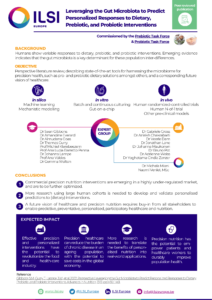
Humans often show variable responses to dietary, prebiotic, and probiotic interventions. Emerging evidence indicates that the gut microbiota is a key determinant for this population heterogeneity. Here, we provide an overview of some of the major computational and experimental tools being applied to critical questions of microbiota-mediated personalized nutrition and health. First, we discuss the latest advances in in silico modeling of the microbiota-nutrition-health axis, including the application of statistical, mechanistic, and hybrid artificial intelligence models. Second, we address high-throughput in vitro techniques for assessing inter-individual heterogeneity, from ex vivo batch culturing of stool and continuous culturing in anaerobic bioreactors, to more sophisticated organ-on-a-chip models that integrate both host and microbial compartments. Third, we explore in vivo approaches for better understanding personalized, microbiota-mediated responses to diet, prebiotics, and probiotics, from non-human animal models and human observational studies, to human feeding trials and crossover interventions. We highlight examples of existing, consumer-facing precision nutrition platforms that are currently leveraging the gut microbiota. Furthermore, we discuss how the integration of a broader set of the tools and techniques described in this piece can generate the data necessary to support a greater diversity of precision nutrition strategies. Finally, we present a vision of a precision nutrition and healthcare future, which leverages the gut microbiota to design effective, individual-specific interventions.
Prebiotics, particularly non-digestible carbohydrates (NDCs), are increasingly recognized for their role in modulating immune responses in the gut, lungs, and urinary tract. This review systematically evaluates evidence from human studies on the effects of NDCs and prebiotics on immune markers, infection risk and severity, inflammation, and vaccine responses. Prebiotics such as inulin, galactooligosaccharides (GOS), and fructooligosaccharides (FOS) positively influence gut microbiota by promoting beneficial species like Bifidobacteria. They also enhance the production of short-chain fatty acids (SCFAs) like butyrate, which interact with immune cells via G-protein-coupled receptors, inducing anti-inflammatory effects. In addition to microbiota-mediated mechanisms, NDCs and prebiotics may directly affect immune and epithelial cells by interacting with pattern recognition receptors (PRRs), enhancing gut barrier function, and modulating immunity. A systematic review of human studies showed that prebiotics, including GOS, FOS, and 2′-fucosyllactose (2FL), reduced infections and increased IgA in healthy infants, while yeast β-glucan reduced respiratory infection symptoms in healthy adults. Yeast β-glucan and GOS supplementation resulted in improvements in NK cell activity. Some effects on vaccine efficacy were noted in young adults, but the overall impact of NDCs and prebiotics on vaccination and systemic inflammation was inconsistent. Further research is needed to clarify the mechanisms involved and to optimize health applications.
This site uses cookies to provide you with a personalized browsing experience. By clicking “I Agree” or continuing to use the site you agree to allow cookies to be placed and accept the terms set out in our [Privacy Notice]. Please read the Privacy Notice for more information on how we handle information collected from users and how you can control the use of such information.
Functional
Always active
The technical storage or access is strictly necessary for the legitimate purpose of enabling the use of a specific service explicitly requested by the subscriber or user, or for the sole purpose of carrying out the transmission of a communication over an electronic communications network.
Preferences
The technical storage or access is necessary for the legitimate purpose of storing preferences that are not requested by the subscriber or user.
Statistics
The technical storage or access that is used exclusively for statistical purposes.The technical storage or access that is used exclusively for anonymous statistical purposes. Without a subpoena, voluntary compliance on the part of your Internet Service Provider, or additional records from a third party, information stored or retrieved for this purpose alone cannot usually be used to identify you.
Marketing
The technical storage or access is required to create user profiles to send advertising, or to track the user on a website or across several websites for similar marketing purposes.